

Yoga serves as a helpful practice for managing discomfort in the back through gentle movements. Certain postures work well when done regularly to build muscle strength and increase flexibility. These poses train the body to handle current symptoms and help avoid more issues. In some situations, yoga can complement medical care.
The approach always calls for gentle to moderate effort, especially during recovery. Pushing too hard before full healing can cause problems, so listening to the body remains key. Regular check-ins with a healthcare provider help track progress and ensure safe practice.

These yoga poses for back pain focus on natural relief through mindful actions. They encourage better alignment and ease tension without force.
Seated Forward Fold for Back Stretch
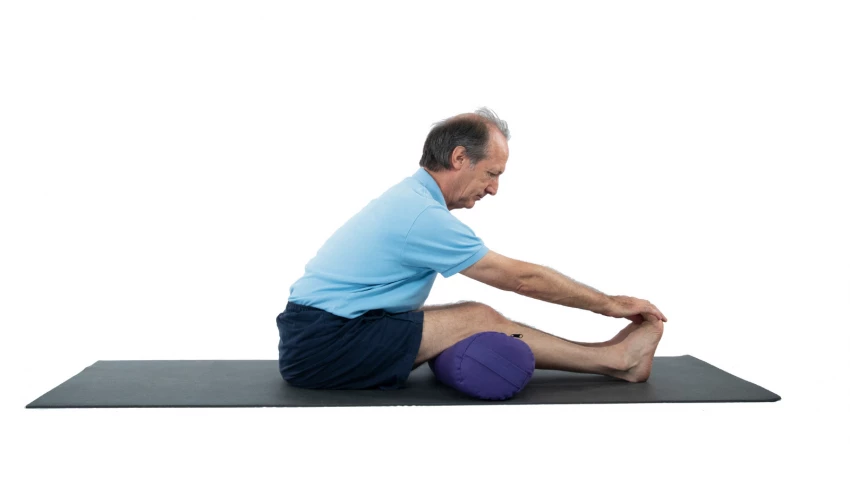
The Seated Forward Fold involves leaning the upper body forward while keeping the hips and legs steady on the ground. This movement stretches the whole back side of the body, from the spine down to the legs.
Many people find a full fold difficult at first, so using props like blocks or cushions helps support the pose. These tools allow the sitting bones to stay grounded and make the stretch more comfortable. Adjustments with yoga mats or other items suit different body types.
This pose extends the spine and lets the back muscles release tightness. It also targets the hamstrings, which often contribute to lower back discomfort when they feel stiff. Maintaining calm breathing and proper alignment keeps the practice peaceful and effective.

:max_bytes(150000):strip_icc()/Verywell-11-3567193-SeatedForward-986-5c54a76246e0fb000152e740.jpg)
Bridge Pose to Strengthen the Back
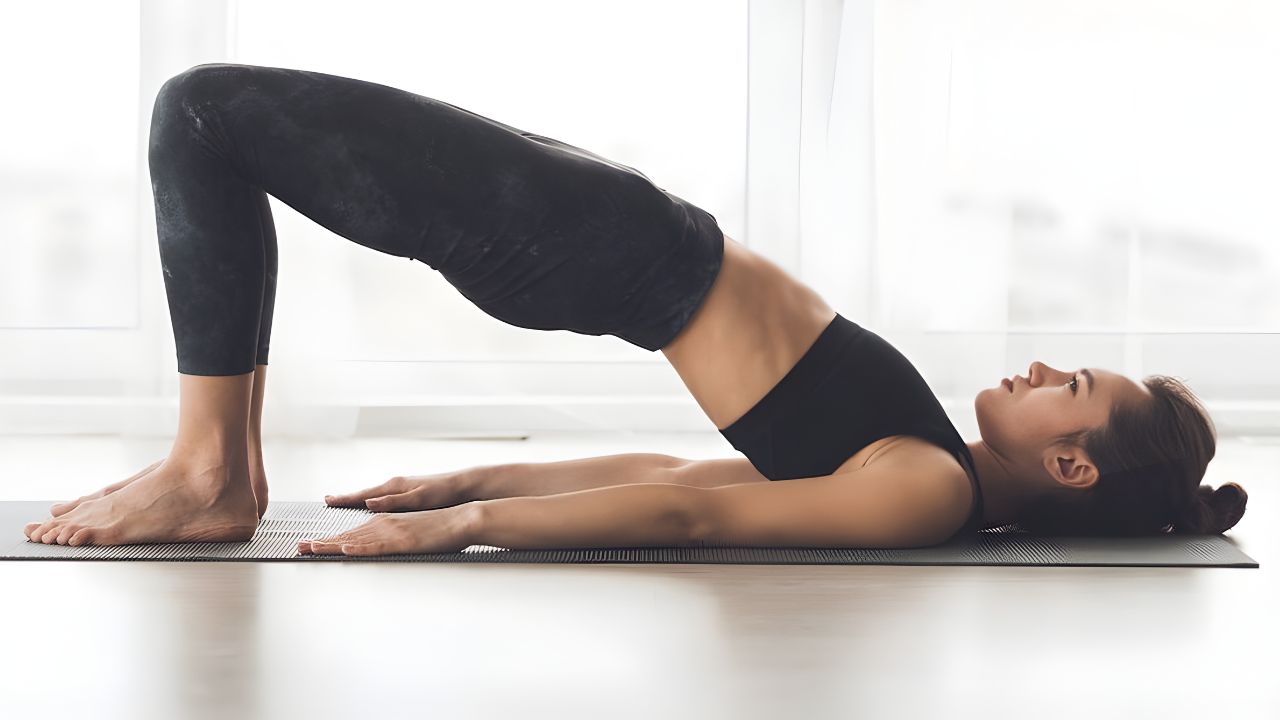
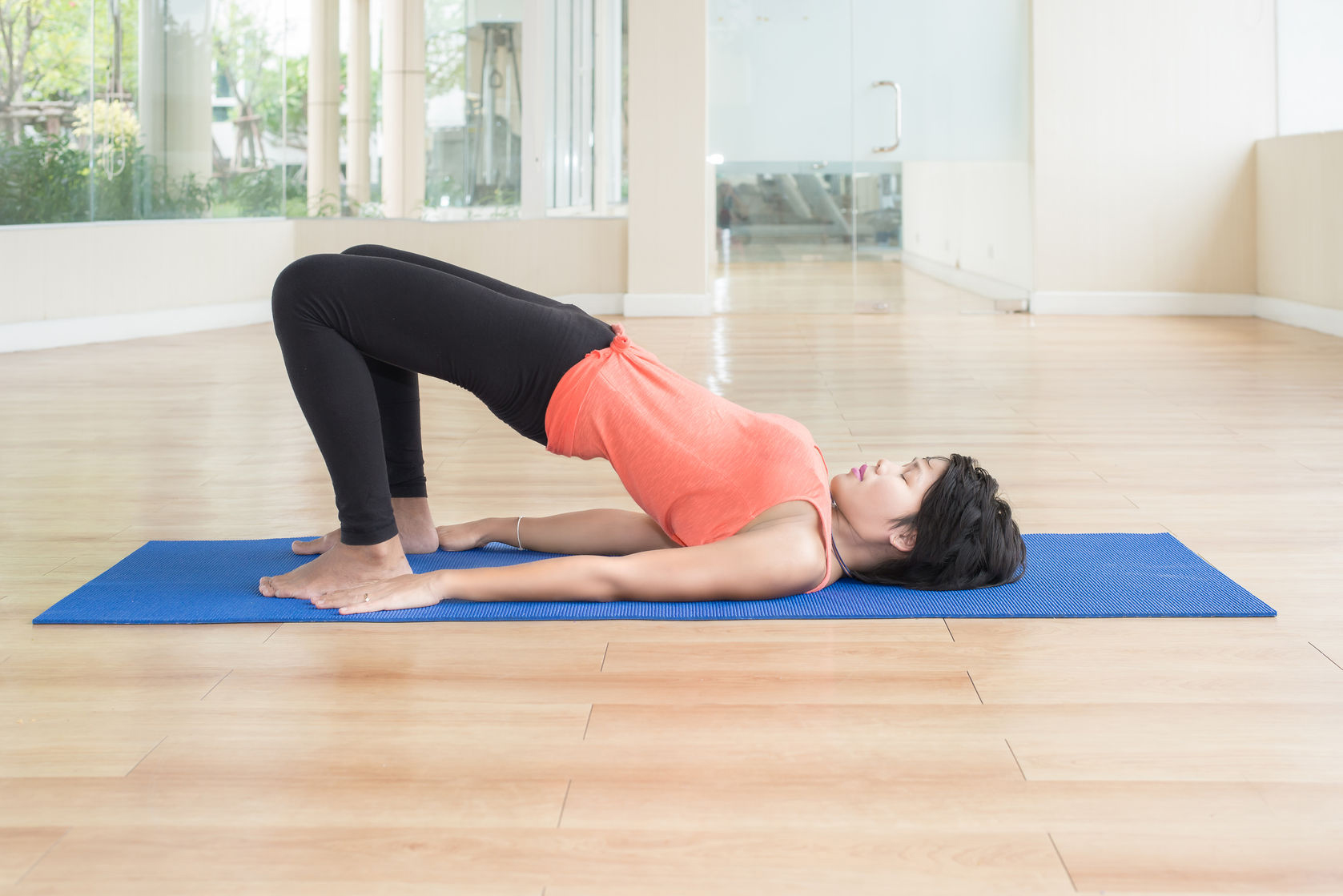
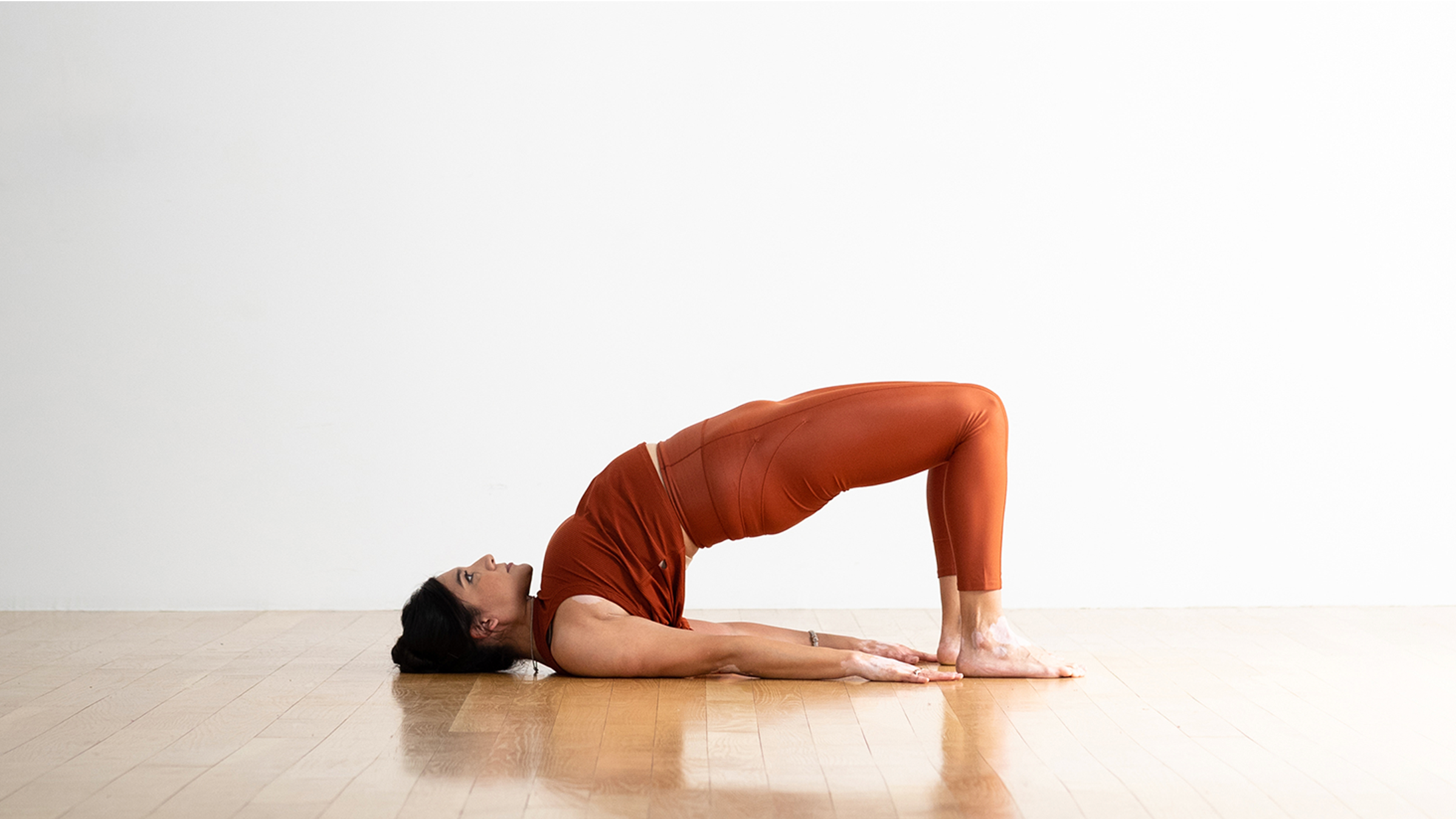
Bridge Pose builds strength in the lower back, hips, and core area while opening the chest. The movement lifts the hips gently, aligning the spine and taking pressure off the lower back region.
Regular sessions with this posture improve overall stability and support for the body. It helps create a stronger foundation that can reduce the chances of back pain returning.
To perform it, lie on the back with knees bent and feet flat. Lift the hips upward while keeping shoulders and head on the ground. Hold steadily with even breathing.
Additional Supportive Poses for Relief
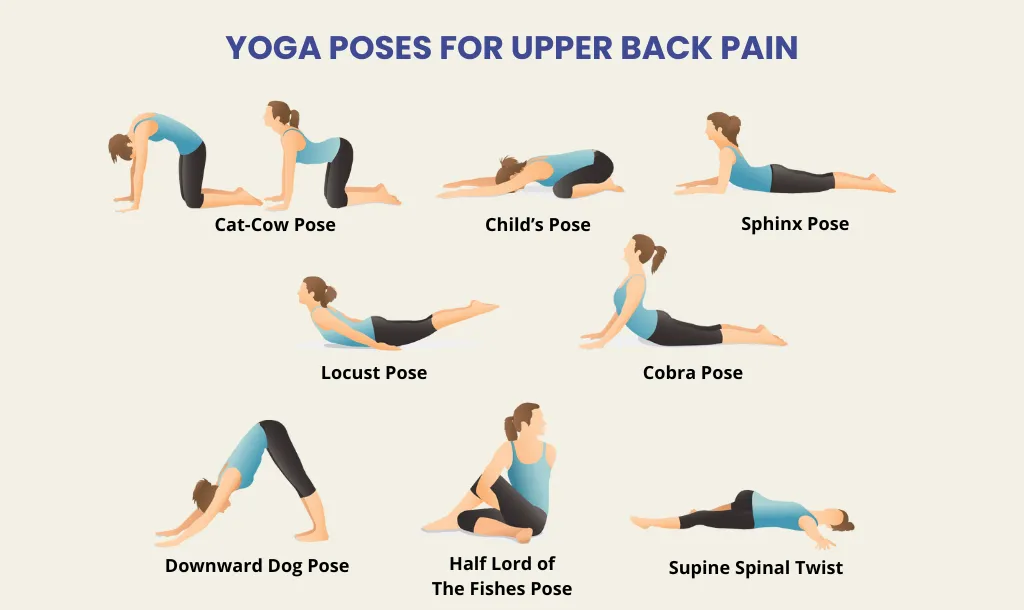
Other gentle movements complement the main postures. Cat-Cow Pose alternates between arching and rounding the back on hands and knees, mobilizing the spine smoothly.
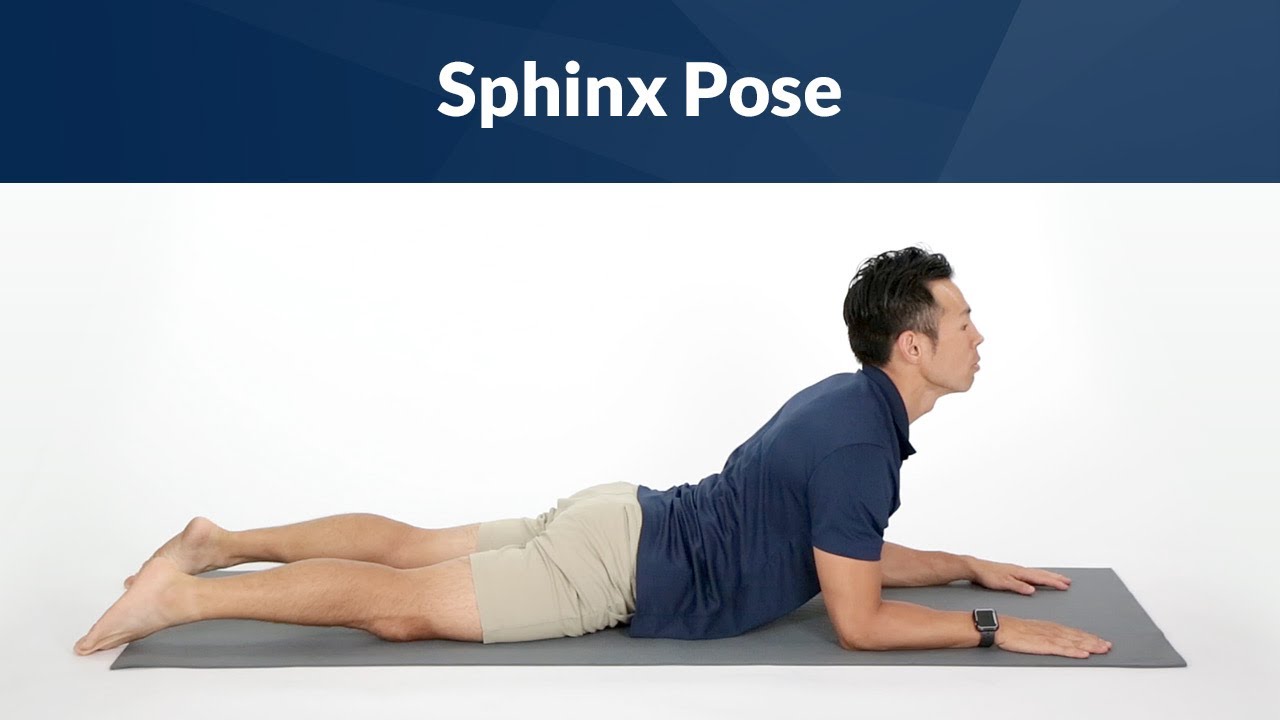
Child’s Pose provides a resting fold forward from kneeling, easing the lower back. Sphinx Pose, lying on the stomach with forearms down, gently strengthens the back muscles.
These yoga poses for back pain add variety and target different areas for natural comfort.
| Pose Name | Key Actions | Main Areas Targeted | Suggested Hold or Reps | Modification Tips |
|---|---|---|---|---|
| Seated Forward Fold | Lean forward from hips, legs extended | Spine, hamstrings, full back | 30-60 seconds | Use blocks or cushion under forehead |
| Bridge Pose | Lift hips from lying position | Lower back, hips, core | 20-45 seconds, 3-5 times | Keep feet hip-width apart |
| Cat-Cow Pose | Alternate arch and round on all fours | Entire spine mobility | 5-10 slow rounds | Move with breath |
| Child’s Pose | Kneel and fold forward | Lower back, hips | 1-3 minutes | Knees wide for comfort |
| Sphinx Pose | Lift chest from prone position | Back muscles, gentle extension | 30-60 seconds | Forearms flat, elbows under shoulders |



Building Long-Term Back Health Through Practice
Consistent yoga sessions focused on back care can support recovery at different stages. Paying attention to body signals helps avoid strain during practice.
Over time, these postures not only ease existing discomfort but also contribute to a stronger spine and improved posture. The gentle approach fosters lasting natural relief.
Summary of These Natural Relief Poses
These five yoga poses offer practical ways to address back pain through therapeutic movements. They include Seated Forward Fold for stretching, Bridge Pose for strengthening, and supportive ones like Cat-Cow, Child’s Pose, and Sphinx for added mobility and ease.
This matters because regular gentle practice builds strength, flexibility, and awareness to manage symptoms naturally. Readers should understand that starting slowly, using props as needed, and combining with professional guidance supports safe progress and better back health ahead.