
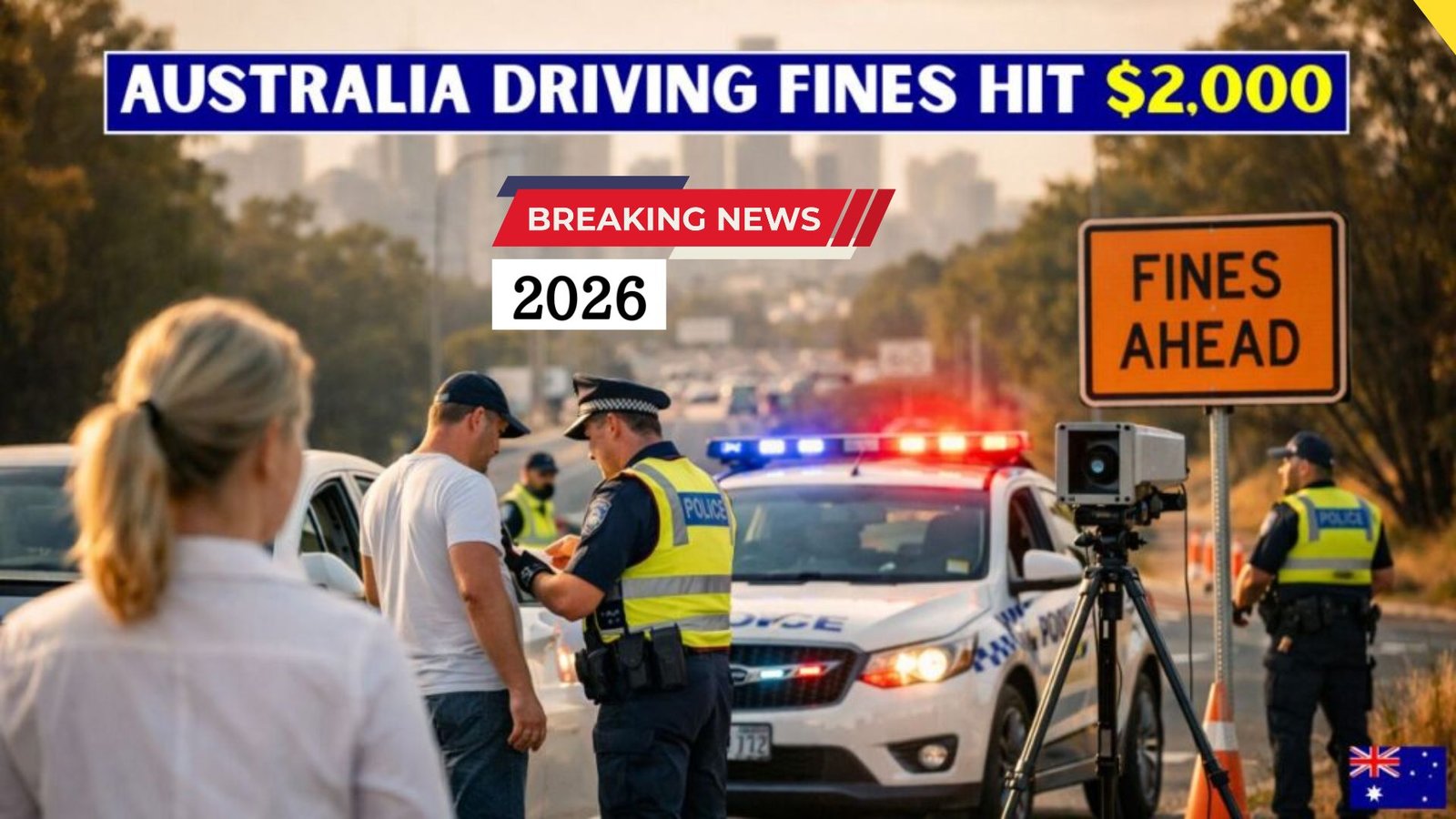
Australia has introduced stricter driving rules starting from 9 January 2026. The new penalties significantly increase fines for common traffic offences. These changes aim to make roads safer by discouraging risky behaviour. Drivers now face much higher financial consequences for violations such as speeding and using mobile phones. The maximum fine for some serious offences reaches up to $2,000. This update affects every motorist across the country, from city commuters to regional drivers.
The revised system targets behaviours that directly lead to accidents. Authorities want to send a strong message that dangerous driving will not be tolerated. With rising concerns about road safety, these tougher penalties form part of a broader effort to reduce crashes and save lives. Everyday drivers must now pay closer attention to traffic laws to avoid costly fines.
New Driving Fine Rules Starting January 2026
The Australia driving fine changes bring sharper consequences for risky actions on the road. Officials have focused on offences that create the highest accident risks. These include high-range speeding, distracted driving, and reckless manoeuvres.
Drivers caught breaking these rules face heavier penalties than before. The system also includes tougher enforcement measures. Police and road authorities will use more technology and patrols to catch violations. Repeat offenders will see even stricter action, with fines that increase based on their history.
The goal is not just punishment but prevention. By making fines noticeable and immediate, policymakers hope drivers will think twice before taking risks. This approach applies nationwide, covering both urban highways and rural roads.
The updates reflect growing concerns about dangerous habits. Speeding and phone use remain major causes of crashes. The new rules aim to change driver behaviour over time. Safer roads benefit everyone, including families and pedestrians.
Driving Violations Now Carrying Fines Up to $2,000
Several common offences now attract much higher fines under the updated system. High-range speeding tops the list, with penalties reaching $2,000. This applies when drivers exceed speed limits by a large margin.
Mobile phone use while driving is another major target. Using a phone for calls or texting can lead to fines up to $1,500. Roadside checks have increased to catch these violations.
Reckless driving, such as aggressive lane changes or tailgating, also carries fines close to $2,000. These actions put other road users at serious risk.
Repeat offences face the highest penalties. Drivers with a history of violations may pay up to $2,000 again, along with extra demerit points. The system reviews offender records to apply escalating consequences.
These high fines send a clear signal. Dangerous choices behind the wheel can quickly become very expensive. The focus remains on offences linked directly to crash risks.
Here is a table showing key violations and their maximum fines:
| Violation Type | Maximum Fine (AUD) | Main Enforcement Method |
|---|---|---|
| High-range speeding | $2,000 | Speed cameras and patrols |
| Mobile phone use | $1,500 | Roadside checks |
| Reckless driving | $2,000 | Targeted police operations |
| Repeat offences | Up to $2,000 | Review of offender history |
This table highlights the offences most affected by the new rules.
How the 2026 Driving Fine Changes Affect Everyday Motorists
The new Australia driving fine rules require extra caution from all drivers. Even minor lapses can now lead to costly penalties. Areas with heavy enforcement will see more checks and cameras.
Drivers should expect stricter monitoring of speed limits and phone use. The reduced tolerance for repeat violations means a single mistake can lead to higher fines later. Staying within posted limits and avoiding distractions is now more important than ever.
Many motorists will need to adjust habits to protect their licences and wallets. The changes affect everyone on Australian roads, regardless of vehicle type or location. Regular commuters, delivery drivers, and holiday travellers all face the same rules.
While some view the penalties as strict, the aim is to promote long-term safety. Drivers who follow the law will avoid fines and contribute to safer roads for all.
What These Higher Penalties Mean for Road Safety
The increase in fines marks a clear shift toward greater accountability on Australian roads. By linking serious violations with high penalties, authorities aim to discourage dangerous behaviour.
The policy combines higher fines with consistent enforcement. This approach works to prevent accidents rather than just respond to them. Safer driving habits can reduce crashes and save lives over time.
While fines alone cannot fix every issue, they act as a strong deterrent. When paired with public awareness and police presence, the measures create real change. The success depends on drivers understanding and following the new expectations.
Road safety advocates support the changes as a step toward fewer tragedies. The focus remains on protecting all road users through responsible behaviour.
What happened, why it matters, and what readers should understand going forward
Australia introduced tougher driving penalties from 9 January 2026. Fines for offences like high-range speeding, mobile phone use, and reckless driving now reach up to $2,000. Repeat violations face even higher consequences.
This matters because it targets common causes of road accidents. The changes aim to improve safety by discouraging risky habits nationwide.
Going forward, drivers should obey speed limits, avoid phone use, and drive responsibly. Staying informed about the rules helps avoid fines and supports safer roads for everyone.